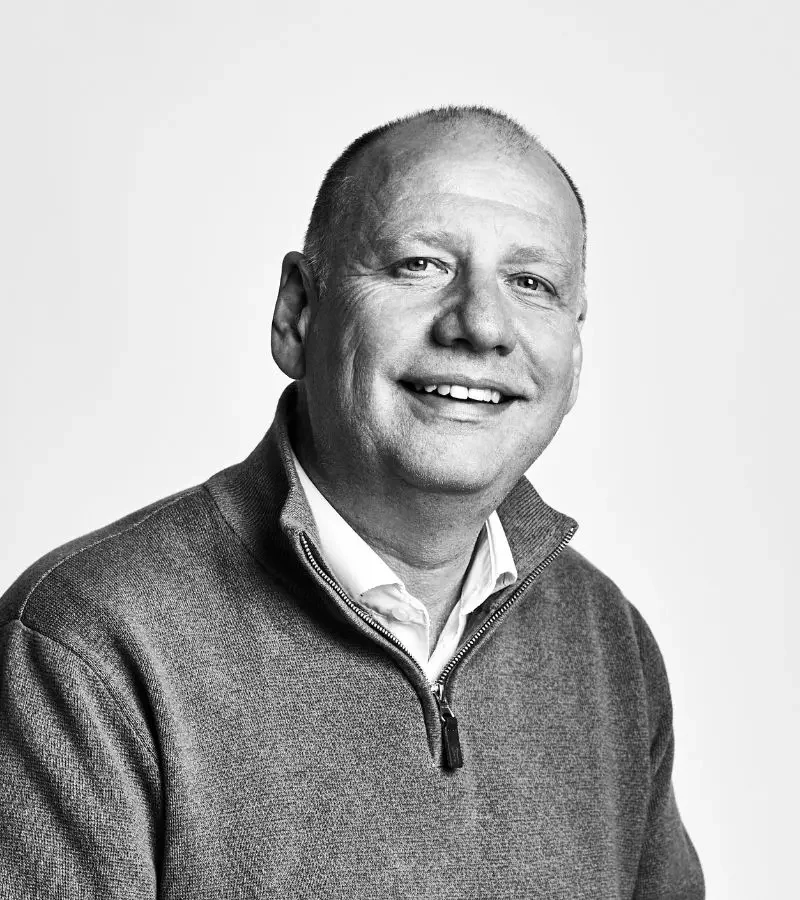
What is/was your role in CENTAUR®?
With a background since his PhD days in wastewater network performance in the early 1990s, Pete was one the originators of CENTAUR®.
What key areas of your expertise were relevant to this project?
Pete has around 50 academic publications in water engineering and asset management, mostly around urban drainage, including the application of AI in these fields. He won the Institute of Civil Engineering’s Telford Prize in 2000 for a paper entitled ‘Predicting Water Quality in Distribution Systems Using Artificial Neural Networks’.
What challenges did you help address during the project?
Engineering CENTAUR® to operate in the harsh and sparse environment of a sewer meant overcoming signal, power, redundancy, failsafe, and other environmental challenges; a successful bringing together of many dedicated experts.
What is your most significant achievement or proudest moment from this project?
The first system that we installed in Coimbra has successfully protected the Church of Santa Cruz in the Praça Oito de Maio, which is a World Heritage Site, since 2018.
What did you find most rewarding about working on this project?
Working with a multi-disciplinary international team of experts including electronic engineers, hydraulic modelers, AI experts, and application (‘real-world’) experts.
What do you think this project’s influence will be?
CENTAUR® offers a targeted way to reduce or eliminate network escapes without the cost, space-requirements, or carbon overhead of traditional concrete-pouring approaches. It offers a way to economically stretch the assets. We are now fixing our sights on water quality and on retaining the more environmentally damaging parts of the storm through to treatment.